What's a fair offer
A defective product past the window is a warranty-and-goodwill question. The lever: the satisfaction score she's measured on and the perks she can authorize without a manager - store credit with a bonus, an exchange, or a warranty claim filed right from the desk.
Techniques you'll practice
- 1 Labeling Name the constraint she's hiding behind so the conversation moves to what she can do.
- 2 Mirroring Repeat her policy line back to show you heard it - and to surface where it bends.
- 3 Reframing Ask what she'd do in your position, handing her the problem to solve with you.
- 4 Anchor Frame the ask around the defect and a fair resolution, not an impossible cash refund.
These are NegotiateIt's eight techniques: Mirroring, Reframing, Silence, Anchor, Labeling, Get Ahead, Plan B, and Narrow Down. They come from established research on mirroring, labeling, anchoring, and knowing your walk-away point. You drill them against an AI that reacts to what you actually say, so the move sticks under pressure.
What works - and what trips people up
Phrases that work
- "It sounds like a straight refund past the window just isn't something you can do."
- "The screen was flickering from almost day one - what are my options when it's a defect, not a change of mind?"
- "If you were standing where I am, what would you try?"
- "I'd much rather sort this out with you than leave a bad review and go to the manufacturer."
Common mistakes
- Leading with anger - it triggers the policy script and a call for the manager.
- Arguing the 14 days instead of the defect - the laptop being broken is your real leverage, not the calendar.
- Asking only for a cash refund (the one thing this store’s policy won’t let her approve past the window) and missing credit, exchange, and warranty.
- Not naming her constraint out loud - "it sounds like your hands are tied on a refund" opens the door to what isn't tied.
- Forgetting you're a repeat customer - quietly worth far more to her than this one transaction.
The setup
Her hands aren't as tied as her first sentence sounds - she's measured on whether you leave happy, and she has a perk she hasn't offered yet.
Read the full setup
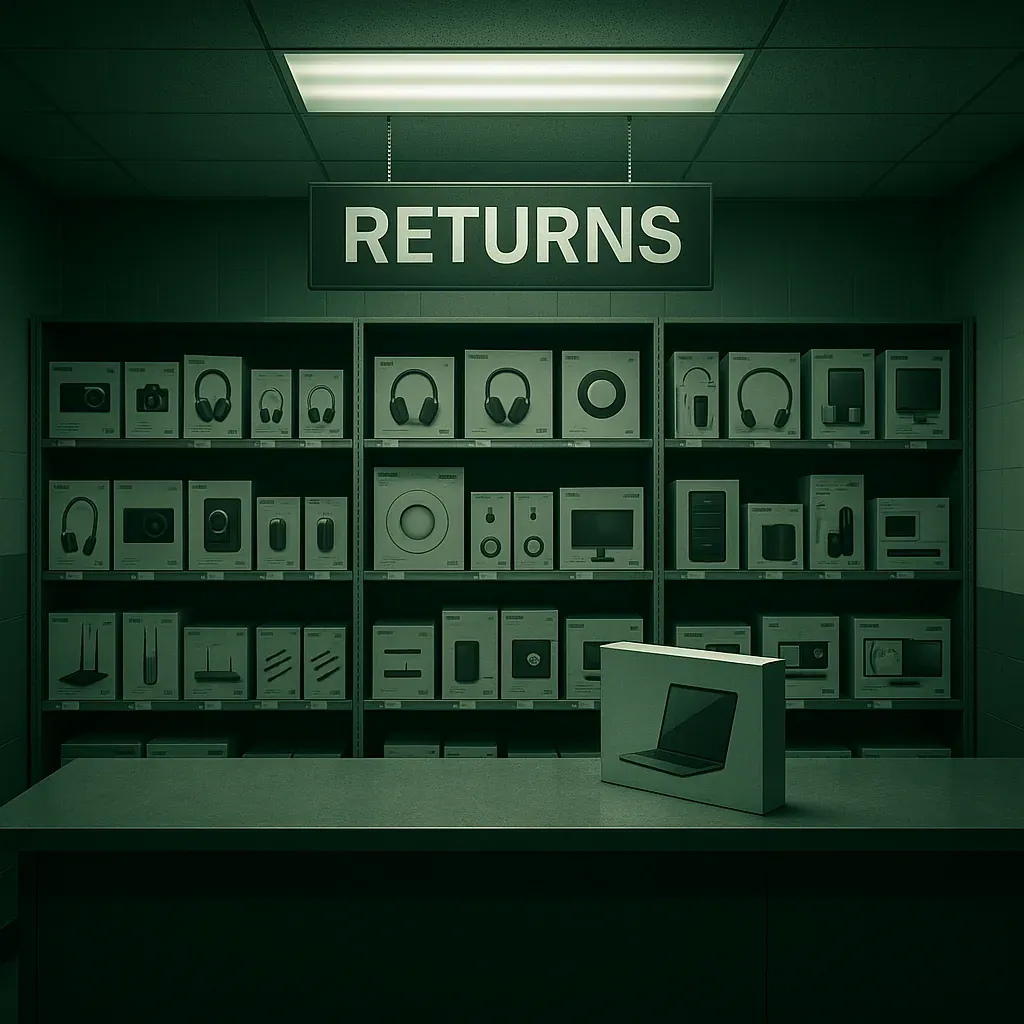
Fluorescent light, neat shelves of boxed electronics, a queue forming behind you. Jenny Nguyen pulls up your order with a friendly, practiced smile. "Oh - I see the return window closed on Tuesday. I'm sorry, our policy's pretty clear on the 14-day window. What seems to be the issue?"
The issue is a $1,299 HP Spectre you bought 17 days ago, and the screen has gone from flickering to barely usable. The issue is that you're two days late and she just said no. What she leads with is policy. What she won't volunteer: she's measured on customer-satisfaction scores and a bad review costs her at bonus time; she can authorize store credit with a 15% bonus without asking a manager; she can open a manufacturer warranty claim from her own terminal; and this laptop model has a known screen fault. She can also see you've spent $4,200 here over two years.
Jenny is an eight-year veteran of this desk who genuinely wants to help and is genuinely boxed in by the system - until you give her a reason and a route. Anger makes her read from the script. Empathy opens the drawer of things she can actually do.
Everyone knows the returns-desk dread: the line behind you, the box under your arm, the sense that the policy already decided this before you opened your mouth. So you either over-prepare for a fight or you cave the second she says "policy." Both lose.
"No" at a returns desk is usually a position, not a fact. The frontline person almost always has more discretion than their opening line admits - they just deploy it for the calm, specific customer, not the angry one. But she runs this exchange a hundred times a week; you do it a couple of times a year, flustered and braced for rejection.
Reps fix that. Practice the actual back-and-forth - labeling her constraint, pivoting from the calendar to the defect, asking what she'd do - against an AI manager who deflects to policy like Jenny, so the word "policy" stops being a wall and becomes your cue.
The US Federal Trade Commission notes that implied warranties cover products even without a written warranty, and in some states they last as long as four years.
Common questions
Can you get a refund after the return window closes?
Often yes - especially when the item is defective rather than unwanted. Past the window it stops being a "return" and becomes a warranty-and-goodwill conversation, where the store has real discretion: store credit, an exchange, or a manufacturer warranty claim. A store’s return window covers change-of-mind returns. A faulty item can carry legal rights the window does not cancel: in the UK you have 30 days to reject faulty goods for a refund, the EU gives at least a two-year guarantee, and in the US implied warranties cover products even without a written one. Lead with the defect and the date you first noticed it, stay calm, and ask what's possible rather than demanding the one thing (a cash refund) that store policy usually stops the desk from approving.
How do I ask for a refund politely but firmly?
Acknowledge their constraint, then pivot to the problem: "I know the window's closed - but this was faulty from almost day one, so what can we do?" Stay warm and specific, keep your tone level, and frame it as a shared problem to solve. Politeness isn't weakness here; the frontline person extends their discretion to the calm customer and reads from the script for the angry one.
What if the store says it's against policy?
"Policy" is usually a starting position, not the end. Label it out loud - "it sounds like your hands are tied on a refund" - which paradoxically frees them to tell you what isn't tied: credit, exchange, a bonus, a warranty claim, or a manager override. Most "against policy" walls have a door somewhere; your job is to find which option they can actually authorize.
Should I push for a refund, store credit, or a warranty claim?
Push for the resolution that's both fair and gettable. Under many stores’ policies, a straight cash refund past the window is the one thing a clerk can’t approve on their own; store credit (sometimes with a bonus), an exchange, or a warranty repair/replacement are frequently within their authority. Name the defect, ask what they can offer without a manager, and take the strongest option actually on the table rather than fighting for the one that isn't.
Sources
Related scenarios
Guides that go deeper
Tools to prep with
Pro scenario.