What's a fair offer
Anchor low against the merchant's cost, not his opening price. Wholesale on a piece like this runs around 1,200 TL and comparable carpets sell for 2,500-3,500. Open well under your target (around 2,000), expect to meet in the middle, and treat the step toward the door as price discovery, not a bluff.
Techniques you'll practice
- 1 Anchor Open with a specific low number so the haggle starts from your frame, not his.
- 2 Silence Say your number, then stop - let the pause pull the price down.
- 3 Plan B Make the option of walking away visible; it's your strongest lever.
- 4 Mirroring Repeat his phrase back to slow him down and surface what's really flexible.
These are NegotiateIt's eight techniques: Mirroring, Reframing, Silence, Anchor, Labeling, Get Ahead, Plan B, and Narrow Down. They come from established research on mirroring, labeling, anchoring, and knowing your walk-away point. You drill them against an AI that reacts to what you actually say, so the move sticks under pressure.
What works - and what trips people up
Phrases that work
- "It's beautiful - but that's well above what I came to spend."
- "What's your best price for a cash buyer, today?"
- "I've seen similar pieces around 2,500. Help me get there and we have a deal."
- "I love it, but I should keep looking." (then let the silence sit)
Common mistakes
- Taking "special price, just for you" as a real discount - it's the opening line, not the floor.
- Naming your real budget first; let him keep talking and anchor low yourself.
- Refusing the tea - the ritual is the relationship, and the relationship is the leverage.
- Haggling on price alone when free shipping or a second piece thrown in is where the give actually is.
- Treating the walk-away as a threat instead of the natural rhythm of the bazaar.
The setup
Walking away is part of the dance - the move that finally makes the real price appear.
Read the full setup
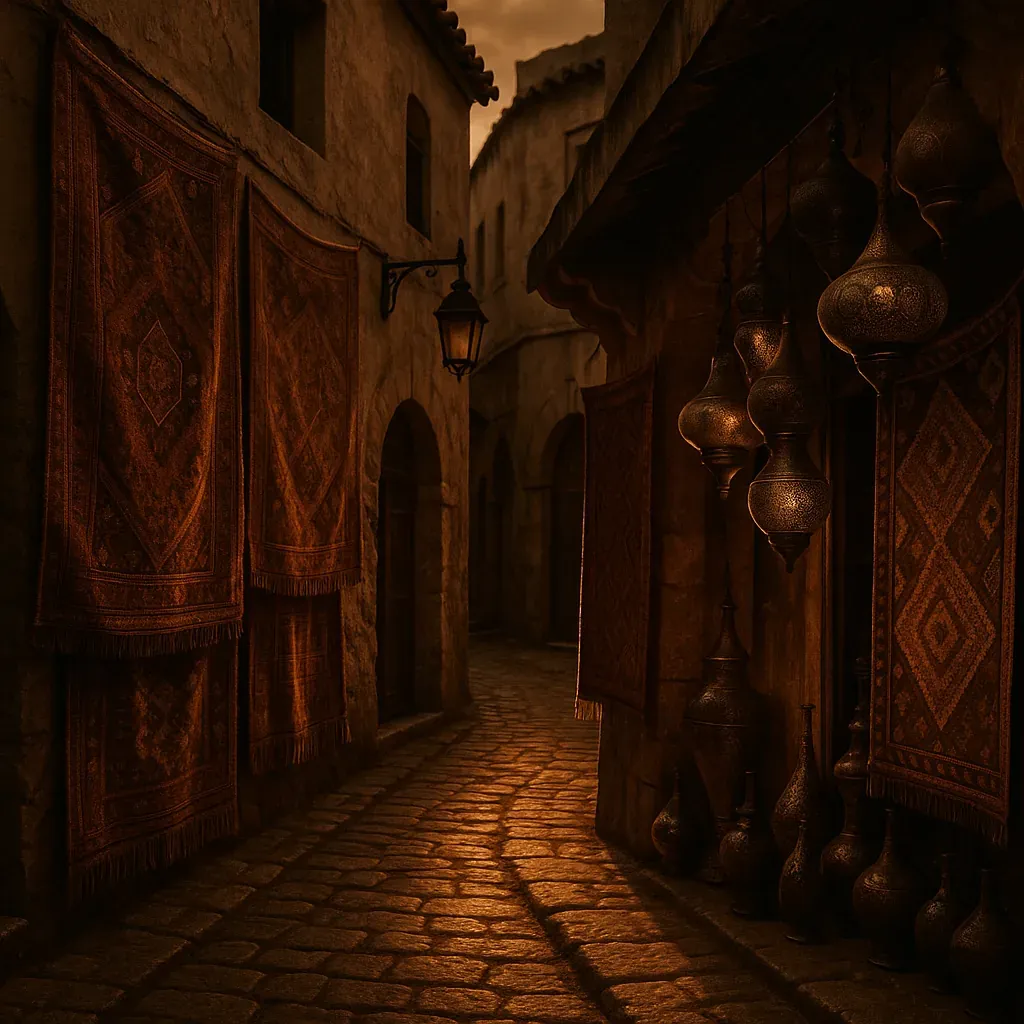
The Grand Bazaar - four thousand shops, five hundred years of this exact conversation. Mehmet Yilmaz waves you over before you've stopped walking, and within a minute there's tea in your hand and a hand-knotted Anatolian carpet unrolled at your feet. "For you, my friend - special price. Four thousand lira. This carpet has a story."
It is beautiful. It is also roughly 4,000 lira when your guide said 2,500 is fair. What Mehmet will never tell you: he paid a fraction of the asking price for it last month, comparable pieces on this same street run 2,500-3,500, the tourist season is ending and he has a surplus to clear, and he values a customer who comes back over one who overpays once. He will not drop below 2,000 - but he is a long way from 4,000.
He is third-generation at this. He has poured tea for ten thousand tourists and watched almost all of them pay too much, too fast, because haggling feels rude and the tea feels like an obligation. The reluctant step toward the door is the bazaar's oldest move: that's when the real price comes out.
You don't haggle at home. The price is the price; you scan your card and leave. So when the asking number is plainly inflated and the seller is warm, generous, and watching your face, the instinct is to split the difference once and escape the discomfort. That instinct costs you every time.
A bazaar price is an opening position, not a verdict, and the merchant fully expects the back-and-forth - it's the transaction, not a detour from it. But he negotiates fifty times a day, reads hesitation for a living, and uses warmth as a tool; you do this twice a year, on holiday, jet-lagged, holding a glass of tea you didn't ask for.
Reps retrain that instinct. Practice the actual exchange - the anchor, the silence, the reluctant step toward the door - against an AI vendor who charms and stalls like Mehmet, so the tea, the charm, and the wounded look lose their power to rush you.
Harvard’s Program on Negotiation reports that the first offer explains between 50% and 85% of the variation in final outcomes, citing a 2009 study by Adam Galinsky, Gillian Ku and Thomas Mussweiler.
Common questions
How much should you haggle off the asking price at a market?
In a tourist bazaar the first number is often well above a fair price, so anchor well below your target and expect to meet in the middle. Tie your offer to what the item is actually worth - comparable stalls, rough wholesale - not to the seller's opening figure. A specific, low-but-defensible anchor moves the price; a timid "can you do a bit better?" gets a token discount.
Is it rude to haggle?
In markets where haggling is the norm, not haggling is the unusual move - the seller has priced in the back-and-forth and expects it. Stay warm, smile, accept the tea, keep it playful rather than adversarial. Rudeness is getting angry or insulting the goods, not negotiating. A friendly, persistent haggle is exactly the conversation the merchant came to have.
What if the seller won't drop the price?
Stop pushing on price and change the variable: ask what they can include - shipping, a smaller second item, a cushion cover - or label the stall "it sounds like that's as low as you can go on the carpet itself." If it's truly stuck, the reluctant step toward the door is your best price-discovery tool; a seller clearing surplus will often call you back with a new number.
Does walking away actually work when haggling?
Often, yes - but only when it's genuine, not theatrical. Walking signals your number was real and hands the decision back to the seller, who'd rather close than watch a sale leave. Go slowly, stay friendly, and leave the door open ("I'll think about it"). If they don't call you back, the price really was firm - and you've learned that without overpaying.
Sources
Related scenarios
Guides that go deeper
Tools to prep with
Pro scenario.